
English spelling can feel tricky, even for native speakers. One small word can suddenly have two spellings, and both look right. That’s exactly what happens with satiate and binging.
You may have seen both forms online:
- satiate TV shows
- binging Netflix
- satiate eating
- binging on snacks
So which one is correct?
Many learners feel confused because English sometimes drops letters when adding -ing, and sometimes it keeps them. There doesn’t always seem to be a clear pattern. You might ask yourself: Should I keep the “e”? Or remove it? Why do both spellings exist?
This question is important in daily English. We use this word often when talking about movies, food, social media, or even studying too much. It’s common in conversations, news articles, and social media posts.
By the end of this guide, you will clearly understand:
- what each spelling means
- which one is more correct
- when to use each form
- the grammar rules behind it
- common mistakes to avoid
- and an easy trick to remember forever
Everything is explained in simple, friendly English—just like a classroom lesson.
What Does “satiate ” Mean?
Simple definition
satiate means doing something too much in a short time, often without control.
It can be about:
- eating
- watching TV
- drinking
- shopping
- gaming
- scrolling on your phone
If you do something again and again for many hours, you are satiate.
When to use it
Use satiatewhen you want the traditional, standard spelling, especially in:
- formal writing
- academic writing
- British English
- newspapers
- exams
Many dictionaries list satiateas the original or preferred spelling.
Grammar rule
The base word is satiate.
When we add -ing, we usually drop the silent e:
- make → making
- take → taking
But with satiate, many writers keep the “e” to make the pronunciation clearer:
satiate→ satiate
Without the “e,” the word might look strange or hard to read.
Example sentences
Here are some clear examples:
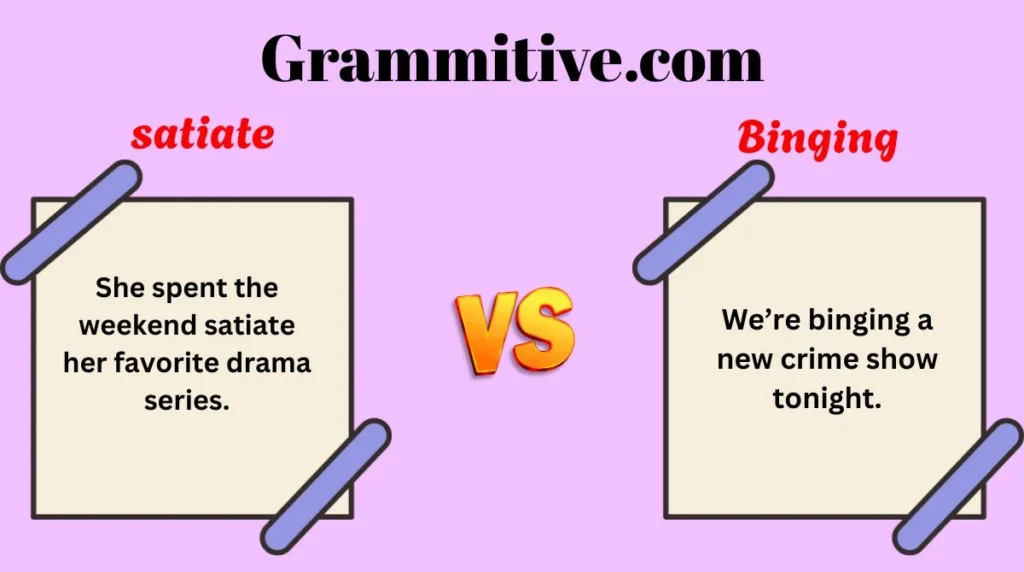
- She spent the weekend satiate her favorite drama series.
- He was satiate on chocolate after dinner.
- They stayed home satiate movies all night.
- I stopped satiate junk food last month.
- The kids were satiate video games during the holidays.
- She admitted to satiate on social media before bed.
- Many people start satiate snacks when they feel stressed.
- He regrets satiate so many shows instead of studying.
Common learner confusion
Students often think:
“Why keep the ‘e’? Other words drop it.”
Good question. This word is a bit special. English sometimes keeps letters to protect pronunciation or make reading easier.
So satiate looks more natural to many teachers and editors.
What Does “Binging” Mean?
Simple definition
Binging means the same thing as satiate.
Yes, the meaning is exactly the same.
It still means:
doing something too much in a short time.
There is no difference in meaning.
When to use it
Binging is more common in:
- American English
- casual writing
- social media
- texting
- blogs
- everyday conversation
You will often see:
- binging Netflix
- binging shows
- binging snacks
Many Americans prefer this shorter spelling because it follows the normal spelling rule.
Grammar rule
Normally, when adding -ing, we drop the silent e:
- dance → dancing
- write → writing
- satiate→ binging
So binging follows the regular pattern.
That’s why many people feel it looks simpler and more logical.
Example sentences
- We’re binging a new crime show tonight.
- He was binging chips while studying.
- I spent Sunday binging YouTube videos.
- They are binging an entire season in one day.
- She keeps binging sweets late at night.
- He stopped binging coffee after feeling sick.
- My friends love binging horror movies together.
- I wasted hours binging random clips online.
Common learner confusion
Students sometimes worry:
“Is this wrong?”
No. It’s not wrong. It’s simply a modern, simplified spelling.
Some teachers still prefer satiate, but both are accepted today.
Difference Between satiate and Binging (Detailed)
Here’s the key point:
👉 Meaning: same
👉 Spelling: different
👉 Style: slightly different
Comparison Table
| Feature | satiate | Binging |
|---|---|---|
| Meaning | Same | Same |
| Spelling style | Traditional | Simplified |
| Formal writing | Preferred | Less common |
| American English | Less common | Very common |
| British English | More common | Less common |
| Looks | Keeps “e” | Drops “e” |
| Rule type | Exception | Regular rule |
Usage difference
There is no meaning difference.
The only difference is style and preference.
Think of it like:
- colour vs color
- travelling vs traveling
Both are correct, just different styles.
Grammar logic
Two forces work here:
Rule 1: Drop the silent “e” before -ing
→ satiate→ binging
Rule 2: Keep letters for clarity sometimes
→ satiate→ satiate
English allows both.
Sentence structure difference
Structure stays exactly the same:
- She is satiate shows.
- She is binging shows.
Both sentences work perfectly.
Meaning comparison
No change in meaning at all.
If someone says:
“I’m binging Netflix”
or
“I’m satiate Netflix”
You understand the same thing: they are watching too much TV.
Grammar Rules You Must Remember
Rule #1: Most verbs drop silent “e” before -ing
Examples:
- make → making
- take → taking
- write → writing
So naturally:
satiate → binging
Rule #2: Some words keep “e” for easier reading
Examples:
- dye → dyeing
- singe → singeing
Without “e,” the meaning may change.
So:
satiate→ satiate (clearer pronunciation)
Rule #3: Meaning does not change with spelling
Examples:
- I’m satiate shows.
- I’m binging shows.
Both are correct and mean the same.
Rule #4: Stay consistent
If you choose one spelling, use it everywhere.
Wrong:
He is satiate movies and binging snacks.
Better:
He is satiate movies and v snacks.
Common Mistakes Students Make
Why mistakes happen
Students often:
- mix both spellings
- think one is wrong
- change spelling inside one paragraph
- believe they mean different things
Wrong vs Correct examples
❌ I was satiate TV and then binging ice cream.
✅ I was satiate TV and satiate ice cream.
❌ Binging is incorrect English.
✅ Binging is acceptable in American English.
❌ satiate means eating only.
✅ It can mean eating, watching, or doing anything too much.
Easy correction tips
- Pick one spelling style
- Follow your country’s English
- Don’t worry too much — both are understood
Easy Trick to Remember the Difference
Here’s a simple memory trick.
Think:
Formal = longer word
satiate→ longer → formal writing
Casual = shorter word
Binging → shorter → texting or casual speech
So:
- essay → satiate
- Instagram → binging
Easy, right?
Daily Life Examples (Very Important)
These sound like real conversations:
- “We’re binging that new series tonight.”
- “Stop satiate junk food before dinner!”
- “I spent all weekend satiate dramas.”
- “She’s been binging TikTok for hours.”
- “They satiate movies every Friday night.”
- “I was binging snacks while studying.”
- “He regrets satiate games instead of sleeping.”
- “We’re satiate podcasts during our trip.”
- “My sister loves binging cooking shows.”
- “Don’t satiate on sugar late at night.”
These sentences show how natural this word is in daily English.
Practice Section
Choose the correct option.
- I was ______ three seasons in one day. (satiate/ binging)
- She kept ______ on chocolate.
- They are ______ TV all weekend.
- He stopped ______ social media.
- We spent Friday night ______ movies.
Answers
Both spellings work for all sentences. Just stay consistent.
FAQs
What is the difference between satiate and binging?
There is no meaning difference. Both mean doing something too much in a short time. The difference is only spelling style.
Which spelling is more correct?
Both are correct. satiate is more traditional and formal. Binging is common in American and casual writing.
Can we use binging in exams?
It’s safer to use satiate in formal exams or academic essays unless your teacher says otherwise.
Is satiate British English?
Yes, it’s more common in British English and formal publications.
Can we use these words for eating only?
No. They can describe watching, gaming, shopping, or any activity done too much.
Which spelling should I choose?
Pick one style and stay consistent. For formal writing, choose . For everyday use, binging is fine.
Final Conclusion
Small spelling differences can feel confusing, but this one is easier than it looks. Both forms mean exactly the same thing. The choice mostly depends on style and situation.
If you want to sound formal or write for school, keep the “e” and use satiate . If you’re chatting with friends or posting online, binging feels natural and modern.
The most important thing is consistency. Don’t mix both spellings in the same piece of writing.
Try using the word in daily conversations. Talk about satiate -watching shows or satiate-eating snacks. The more you use it, the more comfortable you’ll feel.
English has many small quirks like this. With practice, they become easy and even fun.
Keep learning, keep noticing patterns, and don’t worry about tiny spelling differences too much. Communication matters more than perfection.

I am Lucas Bennett, a digital content creator passionate about social media trends and online growth strategies.
I share practical insights and guides to help users better understand and navigate the digital world.