

English learners often get confused between words that sound similar but have slightly different meanings or spellings.
One common example is “fillet” versus “filet”. These words may look nearly identical, and both are related to food, especially fish and meat.
However, their spelling, pronunciation, and usage can differ depending on whether you are reading British or American English.
Knowing the difference can help you sound more confident when speaking, reading recipes, or ordering food at a restaurant.
Many learners struggle because English borrows words from French, and sometimes these borrowed words keep their original spelling in certain contexts.
Both “fillet” and “filet” come from the French word filet, meaning a thin strip or boneless piece of meat or fish. This is why people sometimes mix them up.
By understanding the difference, you can avoid mistakes and use the right word in your writing or conversations.
After reading this, you will clearly know which word to use in British English, which in American English, and how to pronounce both correctly.
You will also get examples that show these words in real-life situations, making it easier to remember and use them naturally.
What Does “Fillet” Mean?
Definition:
A fillet is a piece of meat or fish that has had the bones removed. In British English, this spelling is more common and is used for both fish and meat.
When to Use:
Use “fillet” when writing or speaking in British English, or when you are talking about a piece of meat or fish with no bones.
Grammar Rule:
“Fillet” is a noun when referring to the piece of meat or fish. It can also be a verb, meaning to remove bones from meat or fish.
Example Sentences:
- I bought a fresh salmon fillet from the market.
- The chef carefully prepared a chicken fillet for dinner.
- Can you slice the fish into fillets for the recipe?
- He filleted the trout before cooking.
- This recipe needs a beef fillet, not a steak.
- She grilled the cod fillet perfectly.
- The restaurant serves a fillet of sole with lemon sauce.
- Always remove the bones when you fillet fish.
Common Learner Confusion:
Some learners write “filet” instead of “fillet” in British English. Remember: “fillet” is the British spelling, while “filet” is more American.
What Does “Filet” Mean?
Definition:
A filet is essentially the same as a fillet: a boneless piece of meat or fish. However, this spelling is more common in American English. It is also used in special phrases like “filet mignon”, which refers to a tender cut of beef.
When to Use:
Use “filet” when writing in American English or when talking about dishes with French names.
Grammar Rule:
“Filet” is primarily a noun. When referring to meat, it can also be part of a proper name (like “filet mignon”).
Example Sentences:
- I ordered the salmon filet at the restaurant.
- Filet mignon is very tender and expensive.
- The recipe calls for a chicken filet.
- She seared the beef filet with herbs.
- He bought a frozen tuna filet from the store.
- The waiter recommended the cod filet with vegetables.
- Always cook a fish filet on medium heat.
- The chef presented the lamb filet beautifully.
Common Learner Confusion:
Many learners think “filet” is wrong in all contexts. Actually, it is correct in American English or when using French culinary terms.
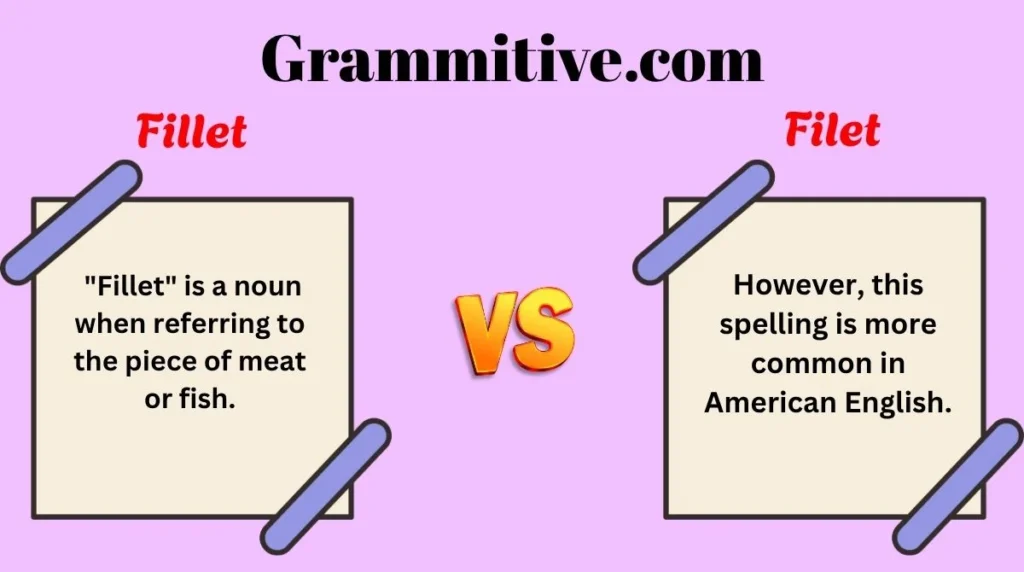
Difference Between Fillet and Filet
| Feature | Fillet | Filet |
|---|---|---|
| Spelling | British English | American English / French term |
| Pronunciation | /ˈfɪlɪt/ or /fɪˈleɪ/ | /fɪˈleɪ/ |
| Usage | General use for fish or meat in UK | General use in US or for French dishes |
| Grammar | Noun & verb (fillet, filleted) | Noun (mostly), part of proper noun in dishes |
| Sentence Example | I grilled the salmon fillet. | The chef served filet mignon. |
| Context | Everyday English, British recipes | American English, French cuisine, restaurant menus |
Usage Difference:
- In British English, “fillet” is standard for both fish and meat.
- In American English, “filet” is standard, especially for beef dishes or French-style meals.
Sentence Structure Difference:
- Fillet: “I cooked a chicken fillet for lunch.”
- Filet: “I ordered a filet at the restaurant.”
Meaning Comparison: Both words mean the same thing—a boneless cut of meat or fish—but spelling depends on region and context.
Grammar Rules You Must Remember
Rule #1: Noun Use
- Use “fillet” or “filet” as a noun to name a piece of meat or fish.
- Example: “The menu offers a grilled salmon fillet.”
Rule #2: Verb Form
- “Fillet” can also be a verb meaning to remove bones.
- Example: “He carefully filleted the trout before cooking.”
Rule #3: Regional Spelling
- British English: fillet
- American English: filet
- Example: UK: “I bought a fillet of cod.” US: “I bought a filet of cod.”
Rule #4: French Terms
- Use “filet” in French culinary phrases like “filet mignon”.
- Example: “The chef prepared filet mignon with garlic butter.”
Common Mistakes Students Make
Mistake #1: Mixing Spellings
- Wrong: “I cooked a filet of chicken” (in UK context)
- Correct: “I cooked a fillet of chicken”
- Tip: Remember, UK = fillet, US = filet.
Mistake #2: Using Fillet Verb Form Incorrectly
- Wrong: “I filet the fish”
- Correct: “I filleted the fish”
- Tip: Only “fillet” can be a verb, never “filet”.
Mistake #3: Pronunciation Confusion
- Many learners say /ˈfɪlət/ instead of /fɪˈleɪ/ in American English.
- Tip: Remember US = /fɪˈleɪ/.
Mistake #4: Using the Word for Wrong Meat
- Wrong: “I bought a fillet of bread”
- Correct: “I bought a fillet of beef”
- Tip: Fillet/filet is only for boneless meat or fish.
Easy Trick to Remember the Difference
Memory Trick:
- Think “fillet with double L = UK”, because the UK likes to add extra letters sometimes.
- Think “filet with one L = US / French”, simple and classic, like American menus.
Real-Life Logic:
- UK grocery store signs: fillet of fish, fillet of beef.
- US menus: filet mignon, filet of fish.
Student-Friendly Explanation: Imagine you are in London: you would say “salmon fillet”. In New York, you would read “filet mignon”. This visual helps the brain remember which word goes where.

Daily Life Examples
- I bought a fresh salmon fillet from the supermarket.
- She cooked a chicken fillet for dinner.
- The restaurant served filet mignon with garlic butter.
- He filleted the fish before grilling it.
- I prefer a tuna fillet over canned tuna.
- At the American diner, I ordered a beef filet.
- She sliced the cod fillet into small pieces.
- The waiter recommended the filet with vegetables.
- Always check for bones before cooking a fish fillet.
- My mom makes a delicious salmon fillet with lemon sauce.
Practice Section
Choose the correct word:
- I bought a _____ of salmon. (fillet / filet)
- He _____ the trout before cooking. (fillet / filet)
- We ordered _____ mignon for dinner. (fillet / filet)
- The recipe asks for a chicken _____ . (fillet / filet)
- In the UK, you would say a salmon _____ . (fillet / filet)
Answers:
- fillet
- filleted
- filet
- fillet
- fillet
FAQs
Q1: What is the difference between fillet and filet? A1: “Fillet” is British English; “filet” is American English or French culinary terms. Both mean a boneless piece of meat or fish.
Q2: Can we use filet in questions? A2: Yes, especially in American English. Example: “Do you want the salmon filet or cod?”
Q3: Is fillet formal or informal? A3: Fillet is neutral. It is used in everyday English, recipes, and restaurant menus.
Q4: Can fillet be a verb? A4: Yes. “Fillet” can mean to remove bones from meat or fish. Example: “He filleted the fish carefully.”
Q5: Why do people confuse fillet and filet? A5: Because both words look similar, sound similar, and come from French. Regional spelling makes it confusing.
Q6: Is filet mignon the same as fillet mignon? A6: No. “Filet mignon” is the correct French term, mostly used in American menus. British English may sometimes say “fillet steak”.
Final Conclusion
Understanding the difference between fillet and filet makes English easier, especially for food, recipes, and menus. Remember:
fillet = UK, filet = US or French dishes. Also, only “fillet” can be a verb. Using these words correctly helps you sound confident in conversations and writing.
Practice with daily examples and menus to reinforce your memory. With time, this small spelling and usage difference will become second nature.
Keep reading, listening, and speaking—it will stick! English is easier when you know these small, but important, differences.

I am Lucas Bennett, a digital content creator passionate about social media trends and online growth strategies.
I share practical insights and guides to help users better understand and navigate the digital world.